Spotlight: Joyce Kim
The Center for Economic Opportunity and Belonging (CEOB) is excited to continue this Spotlight series where we sit down with people to talk about their work and their belonging journey in Utah.
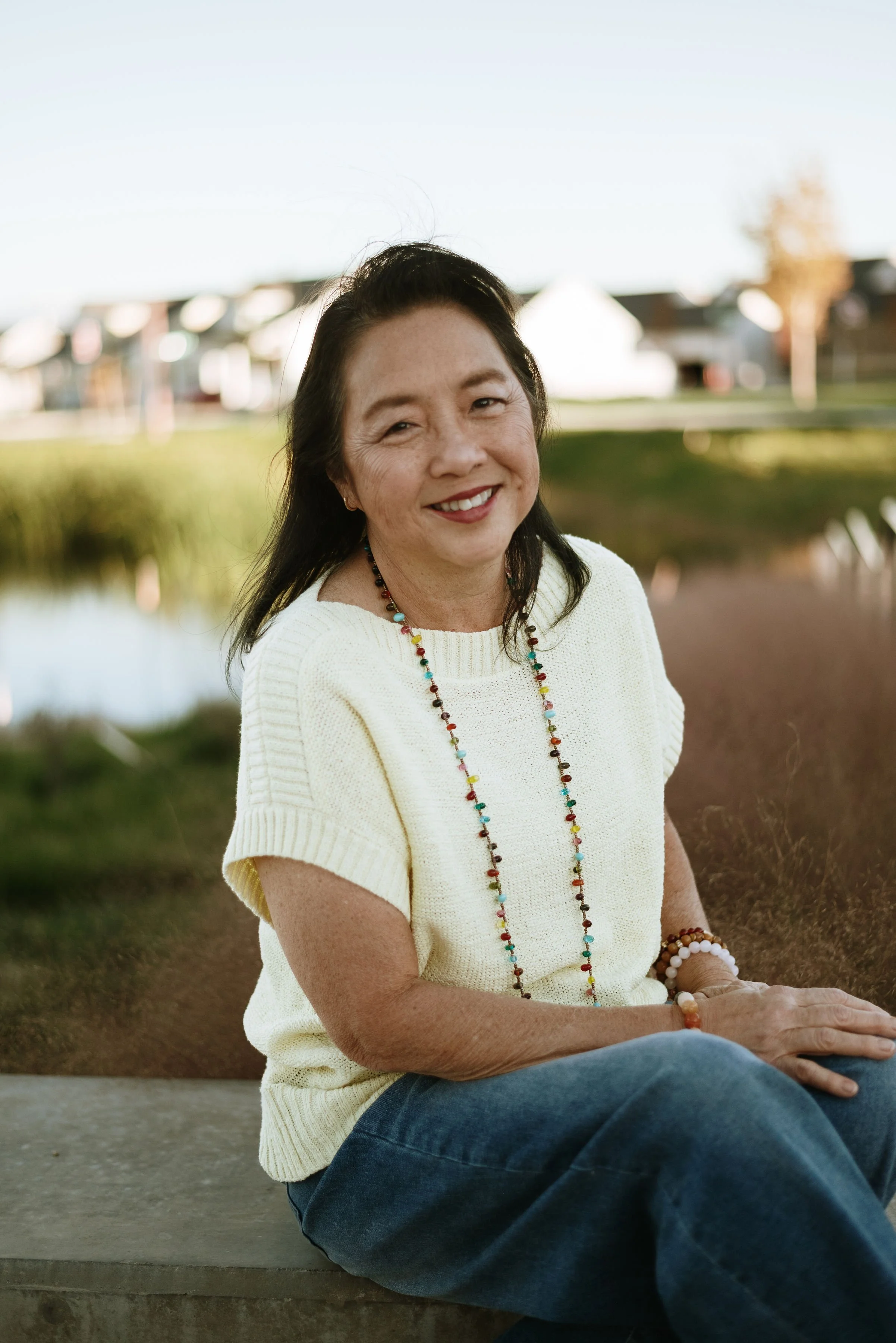
We recently sat down and spoke with our own Joyce Kim and talked about building belonging in Utah and her work with the Community Health Workers and the CEOB.
In two to three sentences can you explain what you do?
My objective for the position is to solidify and stabilize the community health workers workforce within Utah. I work with the Utah Community Health Workers Association to create stability, move the workforce forward, and help community health workers in Utah have a voice and be respected for the services they provide across all realms.
Can you explain why the Utah Community Health Workers Association (UCHWA) chose to partner with the CEOB?
I think there are two main pillars that coincide with the CEOB and the UCHWA. The first is the workforce. Both the CEOB and the UCHWA support the development of workforce continuity. The UCHWA specifically works to make sure that people who are community health workers have a pathway to become respected for the services they provide, to increase their knowledge, and to have upward mobility. Someone who is a community health worker may, in the future, say, “Oh, I think I want to be a PA,” or “I think I want to be an RN,” or a social worker. We both help them understand the workforce development needed to get to that role. The other pillar is that the CEOB is always open to filling the needs of the community. We both understand that underrepresented communities need a voice and need an advocate. The UCHWA is here to make sure that the community health workers have a voice.
What does belonging mean to you?
Belonging to me is everyone working together for a common cause. It means understanding that we may come from different parts of the economy, different workplaces, or do different types of work, but we are all humans and can stand up for what is right. I believe that in Utah we all want everyone to succeed and to be self-reliant, meaning we want people to prosper on whatever path they choose.
The American Dream is still there. We want to own a home, go to school, practice our religion, and be able to voice our opinions without being penalized or labeled as criminals. Those are all things that, to me, define belonging.
Going back to what you do, how do you think belonging fits into what you do at the CEOB?
Belonging fits into my work because the CEOB provides a neutral and supportive platform where people are not afraid to say what they need. With my background in the corporate world, Medicaid, and community health work at the state level, I have seen how important it is to have a space where everyone can come together and feel heard. The CEOB recognizes needs across all spectrums and is willing to step in and help when those needs are identified.
Belonging also shows up in the way we work across cultures and communities. I might not be proficient in how a certain culture works, but when I understand how that culture operates, it allows me to approach conversations in a respectful way that is not negatively received. That is what community health workers do every day. They bring people together in a collaborative way so we can move forward and build a better society as a whole here in Utah.
Can you share with us a bit your past work in this field and what it has shown you/influenced your work here
I started in the commercial healthcare system when I was probably 16. I worked in several different areas within health carriers and health plans, from the mail room to entering claims, answering questions, and marketing health plans. My last role in healthcare was contracting with providers and facilities. I was a negotiator and the enforcer of agreements and contracts, which sometimes was not fun, but it helped me see the different facets of healthcare.
It still amazes me that there are people in the industry who do not fully understand what they are doing within it. With that being said, when I heard about community health workers and what they do, it made so much sense. When you go to the doctor and they tell you, “This is your cholesterol number, this is your glucose number, and this is your blood pressure,” you can be left thinking, “Okay, what does that mean? What do I need to do?” That moment of confusion is exactly why community health workers are so essential in helping people connect healthcare information to real life.
It is very disconcerting that in America, people often do not understand where healthcare fits and how it intermingles with everything else in their lives. That realization is what brought me to this work and helped me see the importance of making sure this objective and this project are a success.
What can we expect to see from you this year?/the Community Health Workers (CHW) initiative?
The main focus is making sure that our workforce is educated and continues to be educated as the health needs in Utah and across the nation continue to change. What affects the nation affects Utah. So one key area is making sure that we continue to educate the workforce.
Another area is educating the public and expanding understanding of how community health workers actually change outcomes overall. The social determinants of health affect everything. I look at it like a small pool, and you throw a pebble in. I know it sounds a little cliché, but it is true. It affects everything around it.
Understanding how those situations ripple through the entire community, and how we can help facilitate resilience and economic growth within our own state, is really the central focus. Going further, it is also about making sure that community health workers have a voice within their communities. Whether someone is Polynesian, a refugee, an immigrant, a young professional, part of an established household, or connected to a specific church, all of those voices need to come together to help educate and support everyone.
What can we expect to see from you this year?/the Community Health Workers (CHW) initiative?
There are many different facets of how people can help. One way is by looking into becoming a community health worker. That means taking the required courses. A lot of people are already doing this kind of work in their communities. For example, Promotoras in the Latino community often go out and help people for free. This provides a career pathway for someone who may have a certain level of formal education but has lived experience and can use that experience to help others.
Another way to help is by learning more about community health workers, what they do in the community, and where they can be found. People can also support legislative efforts to make community health worker services reimbursable by Medicaid. These services are already reimbursable under Medicare, and having Utah add this as a payable service would improve health outcomes and benefit society as a whole.
Finally, people can reach out to me directly if they want more information or want to get involved. Funding is always necessary, especially since the community health worker initiative is still very new in Utah. While the state has been working on this for over 10 years, broader recognition and acceptance of community health workers has really only been in place for about the last two years.
Joyce Contact: jkim@belonginutah.org
Learn more about the UCHWA at: https://www.uchwa.org/