Spotlight: Jose Meza-Leon
The Center for Economic Opportunity and Belonging (CEOB) is excited to continue this Spotlight series where we sit down with community members to talk about their work and their belonging journey in Utah.
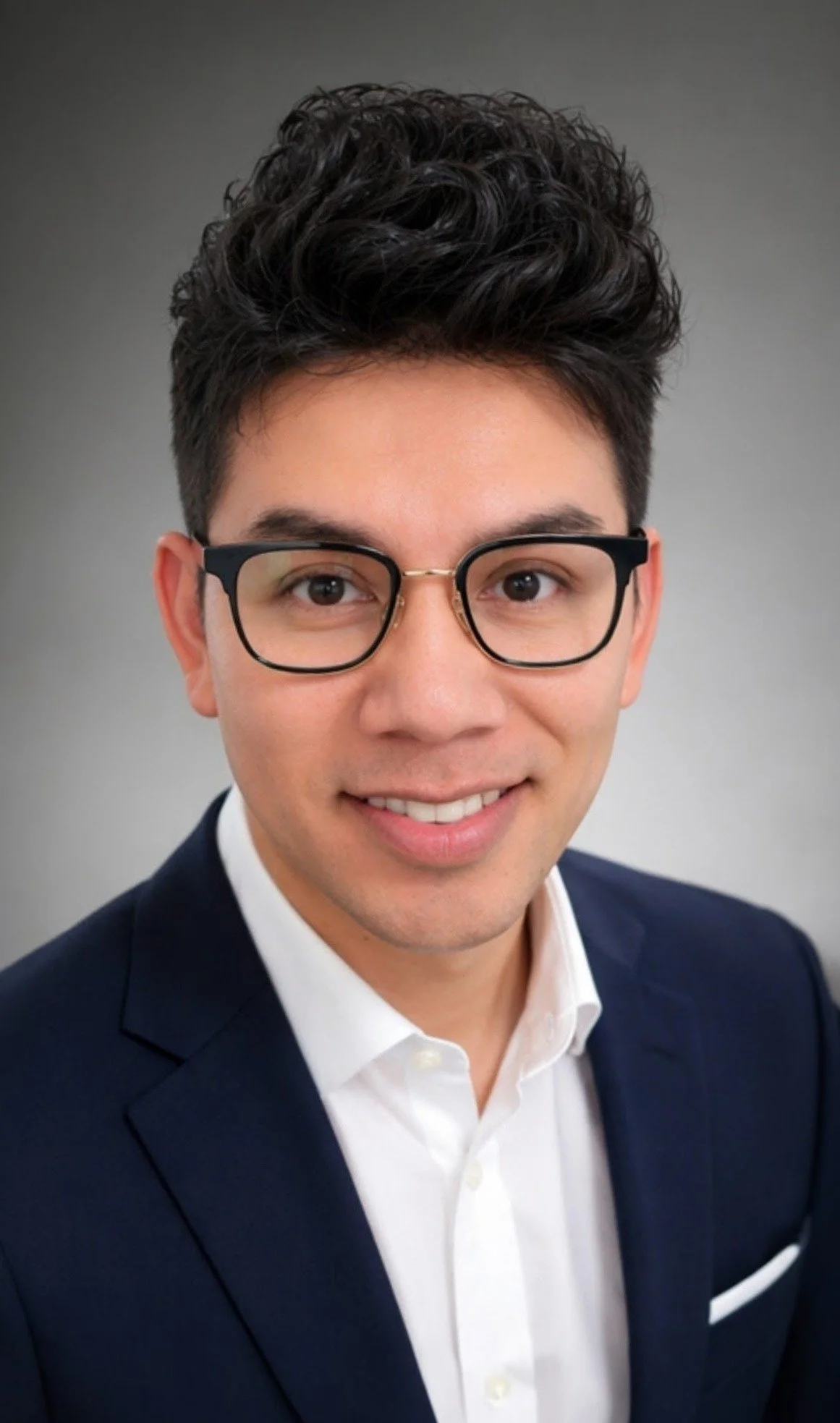
We recently sat down and spoke with Jose Meza-Leon about building belonging in Utah and his work.
In two to three sentences can you explain what you do?
I work with underrepresented populations across Utah, helping individuals and their families access higher education, educating on financial strategies, and empowering graduates to become successful entrepreneurs and professionals. On top of that, I initiated and directed the Foreign Credentials Engagement Initiative. When the state passed legislation for internationally educated and trained professionals to access licensure pathways, I started that work in the community. I felt inspired to bring it to a broader audience, and through the Governor's Office of Economic Opportunity (GOEO) grants, I became director of this initiative. There is a lot of success and opportunity for our state, economy, and communities to grow together with our talented, trained, and experienced newcomers.
In the community, my work goes back much further, back to 2015. I'm passionate about advocating for first-generation students and immigrant populations in Utah, primarily helping them navigate the immigration legal process and whatever barriers they're facing, whether that's accessing legal assistance, educating on scholarships or fellowships, or having someone in their corner to remind everyone of their fundamental human rights. I've assisted individuals at USCIS, the BYU Legal Law Clinic, and in meeting with key stakeholders such as legislators and mayors. This advocacy work sparked my pursuit of becoming an immigration lawyer.
What does belonging mean to you?
Belonging is built with love, grace, equity, justice, mercy, and hope. It is a shared space, and that space lies beyond yourself. I truly believe this. How we treat those that are different from us is a reflection of our own sense of belonging as an individual, as a community and as a country. That's what belonging is to me.
Can you share a little bit about your personal story of finding belonging, or your continued story of finding belonging?
I was born in Los Angeles and grew up surrounded by people of different faiths, backgrounds, and lifestyles, so diversity was just part of life for me. After high school, I moved to Guatemala for a year. It made me grow in ways I didn't expect. I went straight from there into a mission in Mexico, and those two experiences back to back, three consecutive years outside the US, really shaped who I am. The people I met became my family.
Coming back was a culture shock, and I know that sounds ironic because I was born and raised in the United States. But after living so immersed in that sense of community and collective love, I came home and the individualism and materialism hit differently. I started to notice prejudices, and when I moved to Idaho and then Utah, I really didn't feel like I belonged. I fell into a deep depression.
What turned things around was my internship at Catholic Community Services in their refugee resettlement program. I did cultural orientation for people from Latin America, Iraq, Syria, Africa, Asia and watching how deeply they wanted to make Utah home for themselves reminded me of the belonging I had felt in Guatemala and Mexico. I realized that even if I wasn't feeling it myself, I could create that feeling for others. And in doing that, my own sense of purpose started to take shape.
It culminated when I was hired at the Missionary Training Center in Provo as an actor, playing someone who wasn't a member of the church. Because of everything I was going through, it wasn't hard to play that role authentically. Over time, I noticed those missionaries stopped focusing on making me fit in Utah or the Church and instead made me feel like I belonged. That changed everything. I healed, and came to realize that maybe we're all searching for that same thing, belonging. I have a B.A. in International Relations, and ultimately, that's what drives all the advocacy work I do now. For me, being American means doing everything I can to make shared spaces feel like home for everyone.
How do you think belonging fits into your work?
Laws aren't perfect and they are based on interpretation and influenced by narratives. They're man-made, and sometimes they prevent thousands and millions of people from accessing the same opportunities as everyone else. So I've dedicated myself to analyzing policy and legal texts, researching historical context, understanding implications and consequences, and always looking for places where we can adjust, correct, or redefine things beginning at their framework; to strengthen our state and communities. It's a win-win, and I'm always looking for the win-win.
I’m dedicated to helping people navigate how to get their foreign credentials recognized, aligning academic initiatives with workforce readiness, and encouraging persistence in higher education. We're talking about engineers, doctors, professors, highly educated people with incredible talent that benefit our communities. Without these services and vision, they can be discouraged and give up. I decided to take that on. Now many individuals have foreign credentials evaluated, others have licensure, and some have received CPL recognition for higher education. Watching their lives change is incredible. And it matters beyond the individual, everyone wants to contribute. Whether it's your family, in the workplace, a team, when people are seen and valued, it makes everyone stronger because everyone contributes.
In higher education, I’ve focused on expanding access by listening to students and families and removing barriers that get in the way. For example, Utah law accepts utility bills and rental contracts for residency tuition purposes, but inconsistent university policies recognize it for some but not others—adding costs and discouraging enrollment. If it’s going to be recognized anyway, why not from the start? When students know someone is advocating for them, it creates a sense of belonging. I’ve pushed for policy revisions that have led to statewide implementations that benefit everyone. Another barrier: public universities offer reduced tuition to nonresidents in the summer, lowering entry barriers—but when costs jump to 3× in the fall and spring, it filters them out. Institutions with the Board of Higher Education could reestablish a more accessible nonresident tuition rate to boost long-term revenue, graduation rates, and workforce readiness while empowering all students to strengthen our state. Why not?
What are some things you believe we need to do as Utahns to make our state a place where everyone belongs?
Call your legislators and public servants to exemplify principles of belonging, because it reflects in the laws they make. When leaders respect everyone's dignity and work with everyone, it promotes belonging for all and strengthens self-governance. A dynamic and conscientious approach to the state’s changing social fabric acknowledges the economic and social contributions of all immigrants. This allows our state the freedom to evolve, embrace change, value contribution, and recognize the complexities of each individual's journey. We avoid preemptively labeling undocumented immigrants “law breakers” when we realize they have fundamental and internationally recognized human rights; they migrate irregularly due to realities and circumstances beyond their control; they are asserting their rights to survive. History has shown that fear, control, and abuse of power has never been successful in the name of sovereignty, rule of law, or security.
Remember our legacy. One of our church leaders Dieter F. Uchtdorf said in 2013 that members of the Church of Jesus Christ of Latter-day Saints should remember our history when it comes to immigration matters because we were persecuted. Back in 2008, another church leader Marlin K. Jensen urged Utah lawmakers to sit down with an undocumented person, get to know their family, and bring more reason into how they craft legislation. There is a legacy in this country, and in this state, of working together with people from all backgrounds. If we can hold onto that and not forget it, it brings us back to civility- challenging our assumptions and reaching out to others. That's what makes us grow socially, economically, and culturally.
It doesn't matter if you're Muslim, Jewish, Palestinian, or whatever your worldview is. Make a space sacred for others, belonging becomes something bigger than yourself, and that's where it gets powerful. Our landscape is changing, and that's not something that can be stopped. It's human nature. We're always evolving. So if we build a culture of belonging now, future generations will carry it forward. But we have to do the work first. The future has to be hopeful. We’ve seen slavery, segregation, internment camps, the Indian Removal Act, the Chinese Exclusion Act, visa quotas limited by nationalities, racial profiling, law enforcement undermining human rights protected by international law, all this has negatively affected U.S citizens and others. Yet, the future must be hopeful, we can do this together. We can build a legacy that is better, stronger, and lasting
How can people get involved?
If people know I'm a resource, an advocate, and a champion of people in the community I’m happy. Reach out, and we'll work together with them, their families, and their friends.
I'll leave you with one example of what that looks like, be it in higher education, navigating licensure pathways, or being in someone’s corner. A family from South America had immigrated irregularly out of necessity. I met them on the move and assisted them in finding adequate housing. I helped them pursue an education and set goals to learn English. They immediately began to work and contribute to the community. Over time they met the missionaries and were converted to the gospel of Jesus Christ. I am grateful that, in this case, the rights of people on the move—including their rights to safety, dignity, and protections under international law—were recognized. I'm an aspiring immigration lawyer, and that's just one example where showing up for someone and advocating made all the difference. It's born out of hope. That's the only word for it.
*The thoughts and opinions mentioned in this article are affiliated only with the individual, and not with the organizations mentioned