Spotlight: Maury Giles
The Center for Economic Opportunity and Belonging (CEOB) is excited to continue this Spotlight series where we sit down with people to talk about their work and their belonging journey in Utah.
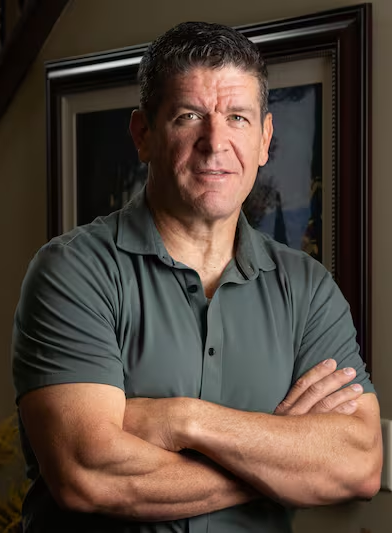
We recently sat down and spoke with Maury Giles and talked about building belonging in Utah and his work with Braver Angels.
In two to three sentences can you explain what Braver Angels does?
At Braver Angels, we envision an America where courageous citizenship is the honored norm, and we exist to be able to help inspire and equip Americans to practice courageous citizenship. We do this through skill building, convening, and collaborative action. What we mean by courageous citizenship is actively engaging in human connection across political differences, to build together, and doing it with dignity and curiosity. You can't build together if you don't have the desire to build together and then the curiosity to find common ground and build, so that's what we exist to do.
What does belonging mean to you?
Belonging means feeling seen and heard for your unique essence of who you are as a person. It's being seen, but it's being seen not just that you're there, but recognized for your uniqueness and afforded the dignity of your innateness to your humanity. When someone extends dignity, or recognizes your dignity and sees you for who you are, then that can reinforce you seeing yourself in the role that you play in whatever entity you're seeking belonging in.
Can you share a little bit about your personal story of finding belonging, or your continued story of finding belonging?
I grew up in New Mexico, and I never really understood or had any concept of being a minority or a majority based on ethnicity, religion, or anything like that. Where I went to school, everybody was different. My religion was very small in terms of numbers, but there were many others as well. As a young person, I felt a sense of belonging based on being part of that school and having those friends. Whether it was ethnicity or language spoken, it all felt normal to me to have diverse perspectives. I felt a sense of belonging that was organic, just by the nature of the people who were there and the fact that none of us was really a majority based on the cultural identifiers that sometimes emerge in society.
The other part of my journey is more personal. I am a member of The Church of Jesus Christ of Latter-day Saints, and I was serving as a bishop in Texas when my wife left and I got divorced. In the Church, like in any faith, there is the doctrine and then there is the culture, or how people apply that doctrine. When I was released as bishop and going through a divorce, I began to experience the culture differently.
I would hear talks about family, marriage, and strength, all things I still believe in, but at times it was painful to hear because my life no longer fit that cultural norm. I knew the intent was not harmful, but I felt excluded by the language because my reality had changed.
Eventually, I remarried, and I found belonging again in realizing that within my faith, and even within its culture, human reality is fragile. It includes opposition, loneliness, and challenge, and that is true for all of us. Going through that experience gave me a much deeper sense of empathy. Now, when I see someone going through something difficult, instead of wondering what they did to get there, I just want to give them a hug and say, “How can I help?”
How do you think belonging fits into the work of your organization?
At the core, the connection to Braver Angels is that we are trying to awaken in people’s hearts and minds a realization that they have complete control over their own agency to choose to act instead of react in our society. The shortest and most direct route to belonging is choosing to act instead of react. What we are trying to do is inspire people to say, “Okay, I can act together locally,” and recognize that this incredible American experiment was meant for diverse groups of people to share an identity of place, hold different points of view on policy, and work together to craft and co-create solutions, rather than placing all of the responsibility on elected officials to solve everything.
There are a lot of things happening around us that can feel scary, troubling, and worrisome. But often they are not troubling simply because we disagree with what we see. They become troubling because we view them through a lens of tribal warfare, assuming there is a group of people who are supporting things we believe are wrong, and then assigning those people harmful intent. We end up believing we have to fight not just policies, but people, ascribing evil to them when that is not the reality. If we can inspire people to recognize their agency and choose to act instead of react, we believe real culture change is possible. That change has to start at the individual level. That is where belonging lives, in a shared identity rooted in American ideals that are worthy of our defense.
What does that local community engagement look like and how is Braver Angels working to bring about the American ideals and to have people reframe that on a local level?
At the individual level, we try to inspire people to look within and look in the mirror. When you find yourself becoming angry, frustrated, or depressed and thinking, “I can’t do anything about this,” we encourage people to lean into the idea that, no, wait a minute, I can control what I do. I can choose to act instead of react.
We do this through our workshops. We offer depolarizing within workshops and a number of self-reflection exercises that help people do that work. We are also training people on the Dignity Index, which allows individuals to self-assess once they have that awareness. Language is one thing and behavior is another, but the Dignity Index is very specific about language. It gives people a way to check themselves and ask, “How am I doing?”
We encourage our members to see public officials as being on tap, not on top. You can tap them to help get things done, but you should not wait for them to act as if they alone are responsible. Too often, from a place of apathy, that is how many of us view politics and policymaking today.
What are some things that you believe we need to do as Utahns to make our state a place where everyone belongs, or for you personally?
If you are in the majority, I think the responsibility is to be more curious about multiple perspectives and to resist the temptation to simply rely on majority rule. That has never been the American way. Madison, Hamilton, and Jefferson were intentional in designing a system that avoided both the tyranny of the majority and the tyranny of the minority. They believed debate and dialogue were essential.
When you find yourself in a position of majority, whether cultural, political, or faith-based, it is incumbent upon you to be more aware and curious about what people who are different from you can add to your life and to your community.
If you are someone in the minority in this state, which is different from many other states because Utah does not have widespread diversity outside of certain pockets, I think there is both a challenge and an opportunity. One of those challenges is resisting the addiction to the dopamine rush of the outrage cycle, where every moment of difference or exclusion is interpreted as intentional harm by the majority. In my experience, that is self-defeating. It does not lead to the outcomes you want, it increases angst, and it reduces curiosity and empathy.
How can people get involved?
Our website is braverangels.org, and I would encourage people to start there. We have a small annual membership fee of $12, and we welcome donations beyond that. Like most nonprofits, resources matter, and we need them to support staff and programs that make this work possible.
There are a few meaningful ways people can get involved. First, if you’re simply curious and want to learn more, I’d recommend signing up for a one-on-one conversation. Through this program, you can choose who you want to talk with, whether it’s someone who is politically different from you, someone from a different ethnic background, or someone from a rural or urban community. Our volunteers will match you with someone from another part of the country for a virtual conversation, and we provide a guided script for three structured conversations. It’s one of our most popular programs because it’s approachable, personal, and often surprisingly impactful.
If, on the other hand, you feel a deeper pull, and if you feel that what’s happening in our country isn’t healthy or sustainable and you want to be part of the solution, then we encourage you to get more involved. We can connect you with a local alliance, or if there isn’t one in your area, we can train and support you in starting one. There are many roles people can take on: co-chairing an alliance, serving as an ambassador to represent Braver Angels in the community, or acting as an organizer, moderator, or facilitator, depending on your interests and skill set.
If volunteering isn’t feasible right now, you can still stay engaged by signing up to receive our
calendar of events and participating in workshops, and bringing others with you.
One example of our current work in Utah is the Citizens’ Commission on Immigration. This initiative brings people with very different views on immigration together to identify shared values, concerns, and solutions. We hold workshops, there’s one this Saturday in Weber County, where participants spend about three hours working through a structured process to find common ground. Then, a few weeks later, their elected official joins the same group to hear directly what they discovered together.
In this case, Congressman Blake Moore will meet with the group to be briefed on their shared findings. It’s a powerful experience for everyone involved because it moves beyond outrage and performative politics. Instead, it creates space for collaboration, problem-solving, and what we call courageous citizenship.
Who is open to participating in Braver Angels?
We’re looking to attract any American who wants to be part of the American experiment, and we’re very intentional about building a membership that represents the full ideological spectrum. One thing I’ve learned from working in the bridge-building space is that people who identify as more progressive or “blue” often feel more naturally drawn to organizations like this. What makes Braver Angels unique is that we are the only organization with significant representation from both conservative and progressive ideological perspectives.
That doesn’t mean Republican versus Democrat—most Americans don’t affiliate with either party. What we’re talking about instead is ideological orientation: when you’re faced with a challenge or opportunity in society, do you tend to approach it from a more conservative mindset, a more progressive one, or somewhere in between? We’re actively seeking all of those perspectives.
We’re also especially eager to involve more young people. We recognize that at certain life stages, volunteering can be harder to commit to in big ways, but young people need to be part of this work. They need to see real-world role models, adults who are actually practicing curiosity, restraint, and collaboration, rather than only what’s modeled on social media or through performative politics by many of our public officials today.